The Linen Ledger · Bedding & Textiles
Why Linen Duvet Covers Make Seasonal Bedding Easier
The most considered bedroom is rarely the one that changes everything with the weather. A linen duvet cover offers a quieter kind of transformation: a washable, tactile layer that protects an insert, softens the look of a bed, and makes it easier to move from one season to another without starting over.
A guide to linen texture, breathable layering, Libeco linen, and the care habits that help a duvet cover earn its place in everyday life.
The case for changing the cover, not the whole bed
A duvet insert can be a long-term part of a bedding arrangement: chosen for its loft, weight, and warmth, then kept in rotation across the year. The cover is the more adaptable element. It surrounds the insert, limits direct contact with everyday wear, and can be removed for laundering or exchanged when the room—or the season—calls for a different mood.
That simple distinction makes seasonal bedding less of a project. As the weather warms, a sleeper might pair the same insert with a lighter sheet and a cover that feels airy and relaxed. When evenings turn cooler, familiar layers can return, with the duvet’s insulation adjusted separately if needed. The cover does not change the fill’s warmth rating; it changes the fabric closest to the sleeper and the visual character of the bed.
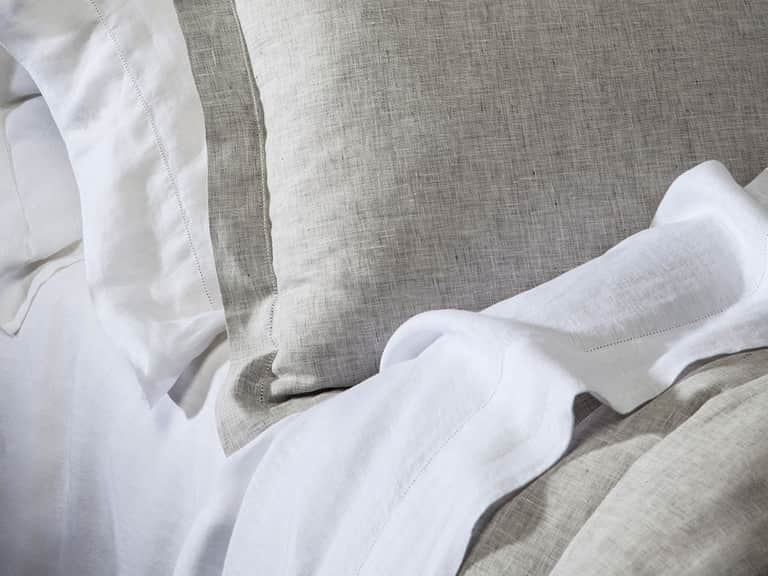
Linen brings a particular ease to that role. Its visible slubs and gently irregular surface give a bed an unstudied quality, while its woven structure has the breathable, natural-fiber character many people appreciate in bedding. It is polished without looking overly pressed, and it can sit comfortably among crisp cotton sheets, a textured blanket, or a simple quilted layer.
In practical terms, a removable cover also helps separate care routines. The duvet insert often needs less frequent cleaning than the surface fabric, although its own care label should always be followed. The cover can be laundered when needed, making it easier to refresh the bed without treating every component as a single, cumbersome object.
Why linen feels at home in a changing climate
Linen is made from flax fibers, and the character of the finished fabric depends on the yarn, weave, weight, finishing, and construction. A linen duvet cover is not automatically cool in every circumstance, nor does a breathable shell override a heavy insert in a warm room. What linen can contribute is a fabric surface with a naturally open, tactile quality that works well in a layered bedding system.
That system is the useful idea. Sleep comfort is shaped by the combination of room temperature, personal preference, sheets, cover, and insert—not by one textile working in isolation. Linen can be part of a flexible arrangement because it pairs readily with other layers and does not require a highly formal styling approach. Its relaxed drape can make a bed look inviting even when the design is restrained.
In warmer months, a lighter duvet insert or a coverlet may be sufficient for some sleepers. A linen duvet cover can remain useful with a lighter insert, or the insert can be set aside while the cover is used as a soft top layer, depending on its construction and the maker’s care guidance. In colder months, the same cover can return to service over an insert with more warmth, with sheets and blankets added as desired.
Think of the cover as a season-spanning constant rather than a climate-control device. Linen does not promise a particular sleeping temperature for every person. Instead, it offers a versatile textile that can be combined with different weights and layers as conditions shift. That distinction matters: a thoughtfully assembled bed is more adaptable than a single fabric claim suggests.
Libeco linen and the appeal of a relaxed finish
Libeco linen offers a useful reference point for thinking about European linen bedding and its understated visual language. The brand’s linen duvet-cover offerings include the Salem and Sailor’s Stripe collections, described in the site’s bedding guide as Belgian linen designs. Together, they suggest two different ways to use the same broad material vocabulary: a quieter field of texture or a more graphic stripe.
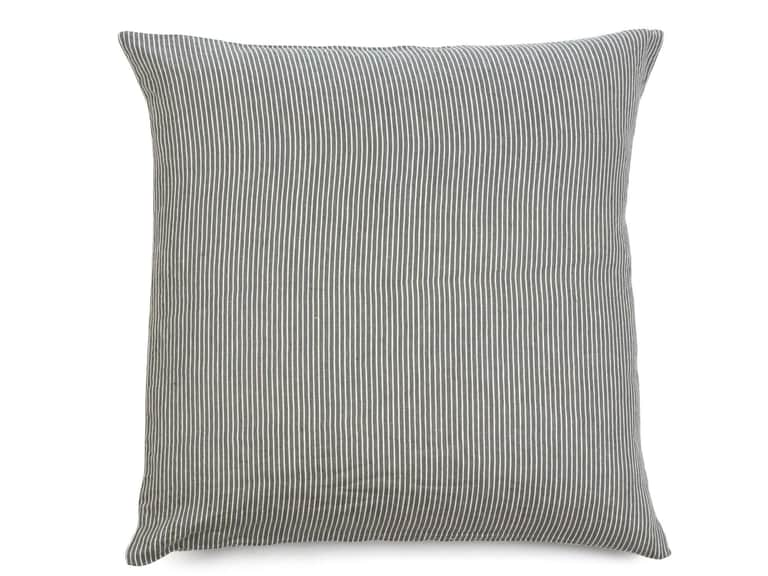
A stripe brings definition without requiring an elaborate pattern story. The Sailor’s Stripe palette, described as River and Ecru, uses a measured contrast that can sit beside white, natural, or muted bedding. That kind of woven-looking visual rhythm can make a bed feel composed while keeping the overall effect easy. It is a particularly useful approach when the rest of the room is simple and the textiles are meant to provide the interest.
For a coordinating accent, the Libeco Sailors Stripe Pillow Sham is described as 100% linen in a washed finish, with a pure linen twill weave and a River and Ecru stripe. Its care guidance specifies washing at a maximum of 40°C, preferring line drying, and ironing while slightly damp if ironing is desired. The sham is an accessory rather than a duvet cover, but it illustrates how a related stripe and finish can bring continuity to a layered bed.
When considering a Libeco linen duvet cover, read the specific product details rather than assuming that every collection shares identical construction or care instructions. Fabric weight, closures, corner ties, available sizes, and laundering guidance can vary by design. Those details are more useful than a general impression of the brand when deciding whether a cover will suit a particular insert and routine.
The visual benefit of linen is also its tolerance for living. Linen’s characteristic creasing is part of its appearance, not necessarily a defect to be pressed away. A washed finish, where specified, may provide a softer, more relaxed hand from the outset. The result is a bed that looks deliberate without demanding a perfectly smooth surface each morning.
A seasonal routine with fewer moving parts
Seasonal bedding often becomes complicated when every layer is treated as a complete set that must be replaced at once. A more practical approach is to think in components: the insert supplies a chosen level of insulation; sheets create the immediate sleeping surface; the cover protects the insert and establishes the bed’s texture; and blankets or coverlets provide optional warmth and visual depth.
At the start of a seasonal change, begin with the insert. If it feels too warm or too light for the room, changing the cover alone will not correct that mismatch. Once the insert is appropriate, choose sheets and top layers that make the combination comfortable. Linen can remain in the rotation as the cover or as a separate accent, while lighter or warmer layers are added and removed as needed.
- For warmer periods: consider a lighter insert or fewer top layers, and keep the bed visually simple. A breathable linen cover can continue to provide texture without making the arrangement feel heavy.
- For transitional weather: use a familiar insert with a sheet and an extra blanket nearby. This makes small nightly adjustments easy without rebuilding the bed.
- For colder periods: choose an insert with warmth suited to the room and sleeper, then layer with a blanket or coverlet if needed. A linen cover can contribute a tactile, relaxed finish.
- Between changes: air the bedding when appropriate, follow the care labels, and store clean seasonal layers in a dry, well-ventilated place.
This kind of rotation is especially useful in rooms where temperatures fluctuate or where different sleepers have different preferences. Rather than expecting one duvet combination to suit every night, keep the pieces distinct enough to adjust. A cover that remains in use across several seasons can make the bedding wardrobe feel more coherent, even as the fill and additional layers change.
There is an aesthetic advantage, too. A linen cover can bridge different seasons without looking tied to a single moment. Its tactile surface works in a pared-back summer bed and can look equally at ease with a wool or cotton blanket in winter. That continuity creates a calm foundation for a bedroom, while smaller accents—such as a striped sham—can be introduced or removed with the season.
How to assess a linen duvet cover before use
Good bedding choices begin with compatibility. Before selecting a cover, confirm the insert dimensions against the cover dimensions. A cover that is too large can allow the insert to shift; one that is too small may compress the filling or strain seams. Brand sizing conventions can vary, so compare measurements rather than relying on a size name alone.
Next, check the practical construction details. A closure should make it possible to remove the cover for washing and put it back on without undue effort. If corner ties or other anchoring features are listed, they can help hold the insert in position; do not assume they are included unless the product information says so. Also consider the way the cover will be used: frequent laundering, pets, children, and a preference for a particularly smooth bed all affect what feels manageable.
Fabric weight is another useful point of comparison, especially when a specification is available. A lighter cloth may feel different in drape and coverage than a heavier one. Weight does not tell the whole story—yarn and weave matter—but it helps create a more informed expectation. Likewise, a washed finish, when stated, may indicate a softer, less crisp character than untreated fabric, although the actual hand remains specific to the textile.
Color and pattern deserve practical consideration as well as aesthetic attention. A pale solid can make a room feel bright and spare; a restrained stripe can provide structure and help coordinate other bedding. Consider which sheets and pillowcases are already in use. A cover need not match every item precisely: a considered contrast in color or texture often looks more personal than a perfectly coordinated suite.
Finally, check the care information before committing to a routine. Instructions may differ by product, finish, trim, or construction. If the cover includes decorative details, those can require particular care. The label and current maker guidance should take precedence over generic advice for linen.
Duvet cover care: protect the fabric and the routine
Care is not a separate concern from design; it is part of whether a textile works in daily life. Start by checking the product’s care label and follow its specific washing and drying directions. For linen, the safest routine is not necessarily the same for every piece. Fiber content, dye, weave, finishing, and sewing details can all influence what the manufacturer recommends.
In general, avoid overcrowding the washing machine. Bedding needs room to move through water and rinse thoroughly, and a packed load can contribute to uneven cleaning or unnecessary friction. Use a detergent appropriate to the fabric and avoid harsh additives unless the care instructions explicitly allow them. Fabric softener is not automatically beneficial; some product-care guidance advises against it, so follow the particular instructions for the item.
Pay attention to temperature and drying. High heat and overdrying can place more stress on textile fibers and may encourage a sharper, more crumpled finish. If the label permits tumble drying, use the recommended setting and remove the cover promptly. Line drying may be a suitable option where the care guidance allows it. Ironing is a matter of preference and instruction: a slightly rumpled linen surface is part of its familiar appeal, while a warm iron on damp fabric may create a more tailored appearance when permitted.
Use a clean, dry cover before storing it between seasons. Fold it loosely, keep it away from damp conditions, and avoid compressing it for long periods if space allows. A ventilated storage area helps keep textiles fresh. Before returning a stored cover to the bed, check that it is completely dry and free of lingering odors.
Regular care need not mean frequent, aggressive washing. The cover is designed to be removable and washable according to its instructions, but the right interval depends on how it is used. A top sheet, household routines, and personal preference all play a role. The aim is a clean, comfortable bed and a care routine that preserves the fabric rather than subjecting it to unnecessary wear.
Build a bed around texture, not matching sets
A linen duvet cover is at its most persuasive when it is allowed to be a textile, not merely a background. Pair it with cotton percale for a crisp contrast, or use linen sheets for a more continuous, relaxed surface. Add a coverlet when a bed needs another layer, or bring in a blanket for warmth and a different scale of texture. The goal is not to stack every available layer; it is to choose a few that do distinct work.
For an understated arrangement, let a solid linen cover carry the texture and keep the pillowcases simple. For a more graphic note, a stripe such as River and Ecru can anchor the bed, with quieter sheets beneath it. A restrained palette—white, natural, stone, or muted blue—can make changes in fabric and weave more noticeable without making the room feel busy.
Carefully chosen bedding also benefits from a little asymmetry. A folded blanket at the foot of the bed, a single patterned sham among plain pillowcases, or a difference between the duvet’s relaxed surface and the sheet’s crisp edge can create visual interest. These are small adjustments, but they give the room a considered quality without requiring an entirely new set of textiles.
For a linen-centered bedroom, the DownTown Company Layla Linen Sheet Set offers another example of linen used as a bedding foundation. Its product description specifies 100% flax linen, a stone-washed finish, and a single hemstitch detail. It is a sheet set rather than a duvet cover, but the details illustrate how linen’s tactile character can be balanced with quiet, tailored finishing.
The enduring appeal of a useful layer
The best seasonal adjustments are often the least theatrical. A duvet cover does not need to transform a room completely to make a difference. It protects the insert, gives the bed a removable surface that can be washed, and makes it possible to change texture or pattern without replacing every layer. Linen adds a relaxed, tactile character that feels at home in a bedroom designed for daily use rather than display alone.
Libeco linen, including its Salem and Sailor’s Stripe duvet-cover offerings, brings a heritage-minded sensibility to that practical idea. A stripe offers a measured decorative note; a quieter linen surface allows the weave and drape to lead. In either case, the details matter: fit, construction, care instructions, and compatibility with the insert are what turn an appealing textile into a reliable part of a bedding routine.
Seasonal bedding becomes easier when the bed is treated as a flexible arrangement rather than a fixed set. Keep the insert appropriate to the temperature, let the cover provide a washable outer layer, and add or remove blankets as needed. With its natural texture and adaptable presence, linen can serve as a constant through those changes—an elegant case for buying fewer pieces, caring for them thoughtfully, and letting a well-made fabric grow more familiar over time.
A quick linen duvet-cover checklist
- Compare the cover’s measurements with the duvet insert before purchase.
- Check the specific fabric weight, finish, closure, and any listed anchoring details.
- Treat the insert and cover as separate parts of the bedding system: one supplies insulation, the other provides a removable textile layer.
- Follow the individual care label for washing, drying, and ironing.
- Choose sheets and accents for complementary texture and color rather than insisting on an exact match.