The Bedding Edit · A Field Guide
How to Choose Bedding by Fiber, Weave, and Care Needs
A beautiful bed begins with what you feel, not what a label promises. Fiber, weave, finishing, fit, and washing habits all shape the way bedding sleeps and ages. Here is how to read those details with a more discerning eye.
There is a particular pleasure in slipping into a freshly made bed: the cool first touch of a sheet, the soft fall of a duvet cover, the reassuring weight of a blanket folded at the foot. Yet the difference between bedding that feels right and bedding that merely looks polished is often found in its construction. The fiber sets the fundamental character; the weave gives that fiber its surface and structure; finishing influences the hand; and care determines how the fabric will meet the rhythms of everyday life.
Thread count can be useful in context, but it is not a complete measure of quality or comfort. A high number cannot tell you whether a fabric will feel crisp or fluid, whether it suits a warm sleeper, or whether it can tolerate your usual laundry routine. A more considered bedding guide begins with the material itself and asks a few better questions: What does the fabric feel like? How does it breathe? How is it woven? And what will keeping it lovely actually involve?
The answers are especially clear when comparing three familiar choices: linen, cotton percale, and cotton sateen. Each has a distinct temperament. None is universally best; the best choice is the one that suits your preferred feel, sleeping environment, and willingness to care for it.
Begin with fiber: the material sets the mood
Fiber is the raw material spun into yarn and then made into cloth. It influences strength, moisture behavior, softness, and the way a fabric responds to repeated washing. Natural fibers and regenerated fibers can each offer useful qualities, but a label should be read precisely: “cotton” or “linen” tells you the fiber family, while the weave and finish provide much of the character you experience against your skin.
Linen: relaxed texture, airy character
Linen is made from flax fibers. In bedding, it is valued for its textured surface, easy drape, and open, relaxed appearance. It can feel pleasantly cool at first contact and tends to soften with use, although it generally retains more visible creasing than a tightly pressed cotton sheet. That rumpled quality is not a flaw to be corrected so much as part of linen’s distinctive presence: informal, tactile, and quietly assured.
Linen may suit people who like a less pristine finish and who appreciate a sheet that changes character over time. It is often chosen for warm conditions, but comfort is personal and depends on the whole sleep environment, including room temperature, the sleeper, and the weight of the bedding layers. Consider the fabric’s actual weight and care instructions alongside the fiber name. “Linen” does not, by itself, tell you how loosely it is woven or how soft it will feel on arrival.
Organic linen options can also include information about sourcing and certification. Those details are worth checking on the product label rather than assuming that a natural fiber automatically means a particular farming or processing standard. Origin statements may identify where flax was grown and where fabric was woven; those are useful pieces of provenance, but they describe different stages of production.
Cotton: versatile, familiar, and shaped by construction
Cotton is a versatile bedding fiber whose feel varies substantially with yarn quality, weave, finishing, and fabric weight. Long-staple cotton is made from longer fibers, which can be spun into smoother, stronger yarns. The phrase is a helpful point of comparison, not a promise that every fabric with the same fiber description will feel identical. Two cotton sheets can differ dramatically when one is woven as crisp percale and the other as smooth sateen.
Organic cotton describes how cotton is produced according to specified standards; it does not identify a weave or dictate whether the finished fabric is crisp, soft, matte, or luminous. For that, look for construction information. A cotton percale sheet and a cotton sateen sheet may share a fiber yet create very different experiences on the bed.
Lyocell and other fibers
Some bedding uses regenerated cellulose fibers such as lyocell. These are made from cellulose that is processed into fiber, and their surface, drape, and care needs can differ from cotton or linen. Rather than treating a fiber name as a shortcut to “cooling” or “luxury,” examine the complete description, including the weave and laundering guidance. A fabric’s performance is the result of its construction, not just its raw material.
Percale versus sateen: two cotton weaves, two different sensations
Once you know the fiber, turn to the weave. Percale and sateen are common cotton constructions, but their contrasting surfaces make them easy to distinguish in daily use. The names describe how threads interlace, not a fiber type. Either can be made from cotton; the resulting fabric, however, will have its own hand and drape.
Percale: crisp, matte, and breathable in feel
Percale has a balanced, closely interlaced construction that typically produces a clean, matte surface. It is often described as crisp, cool, or freshly laundered. For sleepers who prefer a light, straightforward sheet rather than a silky one, percale can be an appealing choice. It is also a natural partner for a carefully made, tailored bed: a smooth surface, a neat edge, and a finish that feels composed without looking glossy.
Percale can soften over time with laundering, though its initial feel and long-term character vary by yarn, fabric weight, and finishing. Some people enjoy the crispness; others would rather begin with a more supple hand. If possible, handle a sample or compare detailed descriptions. Look for composition, weave, finishing, and care together—not thread count in isolation.
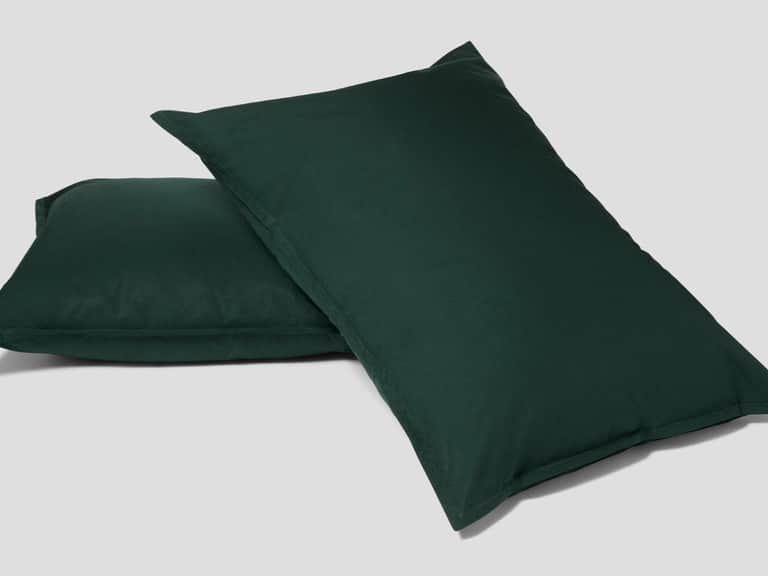
A practical example is the Percale Sham, described as 100% organic cotton in a breathable, durable percale weave. It illustrates the sort of construction detail that helps clarify what a product is intended to feel like, without asking a single number to tell the whole story.
Sateen: smoother surface, more fluid drape
Sateen uses a weave structure that brings more yarn to the fabric’s surface, creating a smoother hand and a soft, subtle sheen. It often drapes more fluidly than percale and may feel silkier against the skin. For someone who likes a softly polished bed, sateen can bring an understated glow—more quiet luster than overt shine.
The smoother surface does not automatically mean a fabric is heavier, warmer, or more durable. Those qualities depend on the particular yarns, density, finishing, and construction. If you tend to prefer a substantial, enveloping sheet, investigate the stated fabric weight and read the care guidance. If you want a light, crisp surface, percale may be the more natural starting point.
The Heirloom Organic Sateen Sheet Set offers a useful example: it is described as organic cotton woven in Portugal, with a sateen construction and plant-based softener. That combination points to a smooth, softly draped feel, while its stated care information—machine washable—helps readers weigh comfort against routine maintenance.
Pattern is not always the weave
A fabric description may mention herringbone, jacquard, or another design. These words can refer to the visible pattern or to a more particular textile structure; the product details should make the distinction clear. Herringbone, for instance, describes a zigzag arrangement that can appear in different fibers and constructions. A patterned surface may add texture and visual interest, but it does not replace the need to check fiber content and care instructions.
The Classic Herringbone Blankets and Throws are made from long-staple cotton and woven in a recognizable zigzag pattern. In this case, the pattern gives the layer visual rhythm, while the cotton fiber and washable care information help explain its everyday practicality. A blanket is not a sheet, of course, but the same reading habit applies: separate fiber, construction, finish, and care instead of treating them as interchangeable claims.
Finishing, weight, and details that change the experience
After fiber and weave, look at finishing. Stone washing, garment washing, piece dyeing, embroidery, and softening treatments can all affect the appearance or hand of a textile. Finishing may make a fabric feel more relaxed from the beginning, preserve a particular look, or add decorative detail. It can also influence how the item should be laundered. A smooth sateen with a softener finish, for instance, may feel different from an untreated sateen in the same fiber and weave.
Weight is another useful clue, particularly for linen, blankets, and layered bedding. A lightweight fabric may drape easily and feel less substantial; a heavier one may have more presence and structure. These terms are not perfectly standardized across every description, so use them as one part of the comparison rather than a guarantee of warmth. For sheets, the room and the full bedding arrangement matter just as much as the individual layer.
Details at the edge can also tell a story about use. A plain hem is simple and versatile; a hemstitch, embroidered border, or scalloped edge adds a decorative finish that may call for more attentive laundering. A fitted sheet’s pocket depth and elastic construction matter for a secure mattress fit. Flat sheets offer flexibility for layering, while pillowcases and shams have different roles: pillowcases are typically made for sleeping, and shams are often used as decorative covers. Read the item description carefully so that a polished photograph or name does not obscure what is included.
Care needs: choose for the laundry room, too
The most beautiful bedding is only practical if its care instructions fit your household. Before choosing, consider how often you wash sheets, the settings available on your machine, whether you line dry, and how much effort you are willing to give a delicate finish. “Machine washable” is a useful starting point, but it is not a complete care plan. Temperature, cycle, detergent, bleach, softener, and drying instructions can all matter.
Always follow the care label for the specific textile. General advice cannot replace manufacturer directions, especially for dyed, embroidered, blended, or specially finished fabrics. If instructions call for a gentle cycle, low heat, or a particular way of drying, those details are part of the product’s real-life compatibility—not fine print to discover after the first wash.
A few habits that help bedding last
- Wash similar colors together and avoid overloading the machine, so the fabric has room to move and rinse.
- Use the recommended detergent amount; excess detergent can leave residue, while harsh products may affect color or fiber strength.
- Skip fabric softener when the care instructions advise against it. It is not a universal solution for making textiles feel softer.
- Choose the drying method and temperature specified on the label. Remove items promptly if the instructions recommend it, and avoid over-drying.
- Treat embroidered borders, decorative trims, and delicate finishes with the care level their construction requires.
- Store clean, completely dry bedding in a dry, ventilated space; avoid compressing delicate pieces for long periods.
Linen’s relaxed creasing may require less pursuit of a perfectly smooth finish, while cotton percale is often ironed by those who prize a crisp, pressed appearance. Sateen’s smoother surface may be appealing straight from the bed, but it still benefits from the care instructions supplied for its specific finish. There is no virtue in choosing the fabric that demands the most elaborate routine if that routine does not suit your life. Low-maintenance comfort is a legitimate design preference.
Read the label like a textile-minded editor
When comparing bedding, take the product description in a considered order. First, identify the fiber content: is it linen, cotton, a blend, or another material? Next, find the weave or construction: percale, sateen, plain weave, jacquard, or something else? Then note the finish, origin information, dimensions, and care. This sequence turns a string of marketing language into a useful portrait of the object.
Thread count belongs in that portrait, but not at its center. It is a count of threads within a specified area of fabric, and comparisons may become misleading when different fibers, yarns, or counting conventions are involved. A 300-thread-count percale and a 300-thread-count sateen are not necessarily alike in hand, drape, or structure. The number cannot tell you whether you will enjoy the sensation of the fabric or whether it is suited to your climate.
Look for specific, verifiable information. “100% cotton” is more informative than a vague reference to a cotton feel. “Percale weave” adds a construction detail. A stated country of origin may clarify where a given stage of production took place, while a certification should be named accurately and tied to the relevant product or production standard. If the details are absent, do not fill the gaps with assumptions.
Match the bedding to the sleeper
Choosing bedding is partly a matter of touch and partly a matter of habit. A person who sleeps warm may gravitate toward linen or crisp percale, while someone who prefers a smooth, softly draped surface may lean toward sateen. These are starting points, not rules. Room temperature, mattress materials, duvet fill, and personal comfort all influence how a sheet feels at night.
For a bed shared by sleepers with different preferences, a balanced approach can work well. Begin with a sheet both people can tolerate, then adjust warmth through removable layers: a light coverlet, a blanket, or a duvet insert suited to the season. A cotton herringbone throw, for example, can provide an extra layer without requiring a complete change of sheets. The value of layering is its flexibility; a bedroom can respond to changing weather without becoming a study in complicated bedding systems.
Fit deserves equal attention. Check the mattress dimensions and depth, especially if a topper or pillow-top changes the finished height. A fitted sheet that is too shallow may pull loose; one that is excessively deep may sit untidily. Confirm what a set includes, since the number of pillowcases can vary by size, and remember that a duvet cover is a protective outer layer rather than a filled comforter.
A simple decision path
If you are beginning from scratch, narrow the field by asking four questions. First: what sensation do you want—crisp, smooth, textured, or fluid? Second: what is your sleeping environment like—warm, cool, or changeable? Third: what is your honest laundry routine? Finally: are you buying a daily foundation or a decorative layer that will see gentler use?
- Choose linen as a starting point if you like visible texture, an easy drape, and a relaxed appearance that becomes more familiar with use.
- Choose cotton percale as a starting point if you prefer a matte, crisp surface and a clean, light-feeling finish.
- Choose cotton sateen as a starting point if you enjoy a smoother hand, a soft sheen, and a more fluid drape.
- Choose by care first if convenience is your priority: compare the exact washing and drying instructions before settling on a fiber or finish.
These distinctions are guides rather than verdicts. One percale may feel softer than another; a linen’s weight and finish can transform its character; and an individual’s preference may change with season or use. When possible, feel the fabric in person. When shopping from a description, look for precise construction details and avoid treating a single claim—thread count, origin, or fiber name—as a complete guarantee.
The considered bed is a personal one
Good bedding does not need to announce itself. It should feel considered, fit the bed, suit the sleeper, and remain manageable after the first wash. Fiber gives a textile its raw identity; weave creates the surface; finishing refines the hand; and care determines whether the relationship is a happy one over time. Once those elements are understood, choosing becomes less about decoding luxury language and more about recognizing what you actually enjoy.
Start with the sensation you want to meet at bedtime. Then check the construction, confirm the dimensions, and read the care label before falling for the finish. Whether your preference is linen’s relaxed texture, percale’s crisp composure, or sateen’s soft luminosity, the most enduring choice is the one that feels right in daily life—not simply the one with the most impressive number on its tag.