A Practical History of Linen in European Mercantile Culture: From Flax to Finish
An editorial journey through the textile economy that clothed empires, shaped markets, and preserved craft. This piece ties the story of linen to the mercantile networks that carried it from fields to catalogs, and from workshops to museums. Along the way, we meet a trio of pivotal figures who dyed their eras with linen, thread, and trade.
Why Linen, Why Mercantile?
Linen’s natural temperaments—breathable, durable, and evolving in texture—made it a favorite among merchants who built catalogs that could travel across seas and centuries.
From the flax fields of northern Europe to the bustling fairs of Antwerp, linen was more than fabric—it was a language of commerce. Guilds regulated quality, catalogs set expectations, and mercantile houses curated combinations of fiber, weave, and weight to meet evolving consumer needs. This article traverses a brief timeline, highlighting the science of flax, the crafts of retting and spinning, and the weaving looms that turned fiber into fashion and function. We also peer into preservation practices that keep linen textiles legible for future generations, especially in museums and curated private collections.
A Brief Timeline: Linen from Flax to Finish
Linen’s journey begins with flax, a plant whose fibers yield a textile renowned for summer coolness and long wear. The stages—cultivation, retting, scutching, heckling, spinning, weaving, and finishing—form a rhythm echoed in mercantile catalogs that standardized fiber content and weave as markers of quality.
Retting and Fiber Preparation
Retting uses moisture and microbial action to separate flax fibers from the stalk. In medieval and early modern Europe, retting was often a communal or regional affair—an act of cultivation that determined fiber yield and quality. Mercantile catalogs began to reflect retting outcomes as uniform fiber lengths, a prerequisite for predictable spinning and weaving.
Weaving and Finishing Techniques
Weavers translated fiber length into structure: plain weave for everyday durability, and damask or linen-twill for drape and texture. Finishing—stonewashing, beeswaxing, or simple wash-and-dry cycles—altered hand feel and aging, influencing how catalogs described softness and luster across seasons.
Mercantile Networks and Catalog Culture
Mercantile houses built vast networks that spanned cities and seas. Catalogs became portable ambassadors of quality—what fibers could do, what weaves produced, and how care would extend life. Linen was celebrated for its hygiene, durability, and evolving colorfast dyes, which merchants promised would endure wash after wash.
Preservation and Museum Curation
Historical linens survive in trust with conservators who study fiber content, lacquers, and mordants used during finishing. Museums document provenance, storage environments, and handling guidelines to maintain legibility of embroidery, threshing marks, and loom imprints for future researchers and visitors.
Key Figures Across Time
Three individuals illuminate linen’s multifaceted history. From a medieval guildmaster shaping early standards to a modern conservator safeguarding textile heritage, these figures anchor the narrative in lived practice and scholarly rigor.
Guilhem la Coutière (14th–15th c.)
A guildmaster who codified linen grading standards and organized woad-dyed linen catalogs along the Rhine trade routes. His ledgers reveal an early pursuit of consistent fiber length and weave uniformity, laying groundwork for mercantile trust across markets.
Context: early modern European linen trade
Isabella van Ryen (16th c.)
A textile artisan who bridged flax cultivation with the spinning frames in Antwerp workshops. Her notebooks trace the shift from rougher to finer linen threads and the introduction of loom innovations that improved yield and texture, later reflected in merchant catalogs.
Context: Renaissance craft and trade
Marie-Thérèse de Saint-Lin (20th c.)
A conservation scientist who reimagined linen preservation protocols in the wake of global textile collections. Her work with institutional archives and museum storage shaped modern practices for safeguarding flax-based textiles for posterity.
Context: textile conservation science
Careful Craft: From Preservation to Practice
Preservation of linen textiles is both science and art. The fiber’s sensitivity to humidity, light, and pH requires a disciplined approach to display and storage—think stable microclimates, acid-free supports, and rotated exhibitions that minimize exposure. For homes and collections alike, understanding the fiber helps determine appropriate cleaning, storage, and handling practices. Linen’s natural resilience shines through when cared for with respect for its origin, its aging process, and its cultural memory.
Fiber science and aging
Linen fibers—flax, retted and spun—gain softness with time, but can also become brittle if improperly stored. Understanding fiber anatomy helps conservators decide when to stabilize, reproduce, or restore a textile’s original hand.
Cataloging and provenance
Catalogs capture the journey: fiber content, weave, finish, and historical context. Provenance notes reveal how textiles moved within mercantile flows—from farm to loom to ledger, and eventually to museum shelves or curated collections.
A Curated Moment: The Mojave Organic Linen Runner
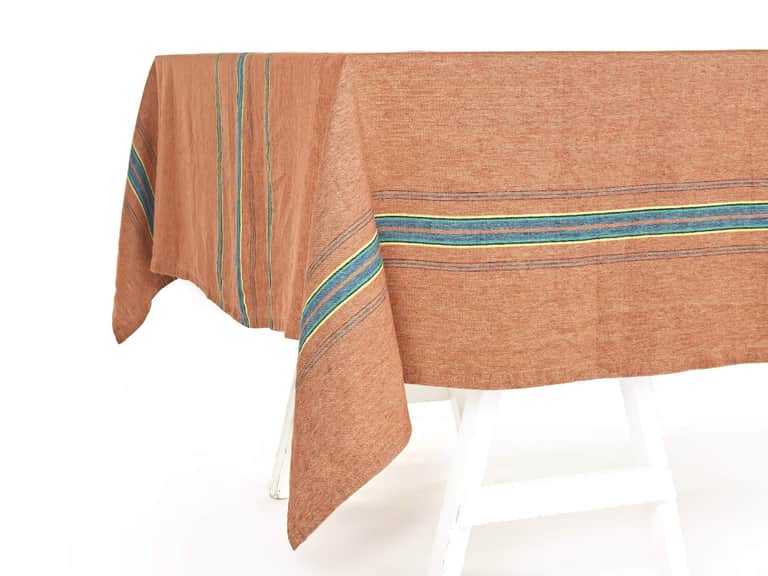
Among the modern touchstones that echo linen’s timeless command of space is the Mojave Organic Linen Runner by Coyuchi. Crafted from 100% organic linen, it embodies the current reverence for natural fibers and responsible production. The runner’s chambray hue, 1" turned hems, and mitered corners offer a refined silhouette that honors linen’s heritage while speaking to contemporary table styling. It’s a modern artifact that nods to mercantile curation—simple, durable, and elevated by texture.
Mojave Organic Linen Runner
100% organic linen, GOTS certified, woven in India. 18" x 108". Care: Machine wash cold with like colors.
This piece demonstrates how modern brands reinterpret the mercantile tradition—responsibly sourcing fibers, preserving hand feel, and designing for durability in everyday settings. It also signals how educational content about linen can be anchored in real, tangible objects within a history-focused site.
Tabletop Textures and Storytelling
A linen runner is a narrative device: it announces a table’s story, invites dialogue about craft, and links material choices to dining rituals across cultures. This is where the mercantile aesthetic becomes a lived experience—an education in texture as a form of knowledge exchange.
Glossary of Terms and Further Reading
Key terms, processes, and recommended sources for readers seeking deeper understanding of linen history and preservation.
- Linen: Fabric made from flax fiber, celebrated for breathability, temperature regulation, and aging into a softer hand.
- Retting: The microbial process that frees flax fibers from the stalk; pivotal for fiber quality.
- Weave structures: Plain, damask, and twill variations that shape texture and durability.
- Mercantile catalogs: Early product samplers that standardized fiber content, weave, and care for consumers across markets.
- Conservation science: The discipline that safeguards textiles through controlled environments and careful handling.
Further Reading and Institutions
For readers seeking credible sources, consider university textile history publications, museum catalogs, and dedicated textile conservation journals. Museums with textile collections often publish online catalogs detailing provenance, fiber analysis, and conservation notes, offering a rich repository for researchers and enthusiasts alike.
Textile Museums and Archives
Explore institutions that curate linen collections, including catalogs that trace the linen’s path from field to fabric to finish.
Academic Journals and Catalogs
Journal articles on flax breeding, retting technologies, spinning innovations, and the evolution of textile markets enrich any reader’s understanding.
Note: This article is part of a broader editorial project exploring linen’s cultural and economic history within European mercantile culture. For educational use, please cite primary sources and museum catalogs when possible.
Want More Editorial Craft?
We can craft a 12-week editorial calendar, a site map with content clusters, and outlines for a starter set of long-form articles that expand this linen narrative.